Create an ultra-realistic natural DSLR portrait using the uploaded girl as the exact facial identity
reference. Preserve her exact face shape, eyes, eyebrows, nose, lips, skin tone, age, proportions, and
recognizable features. Do not beautify, reshape, slim, de-age, or alter her identity.
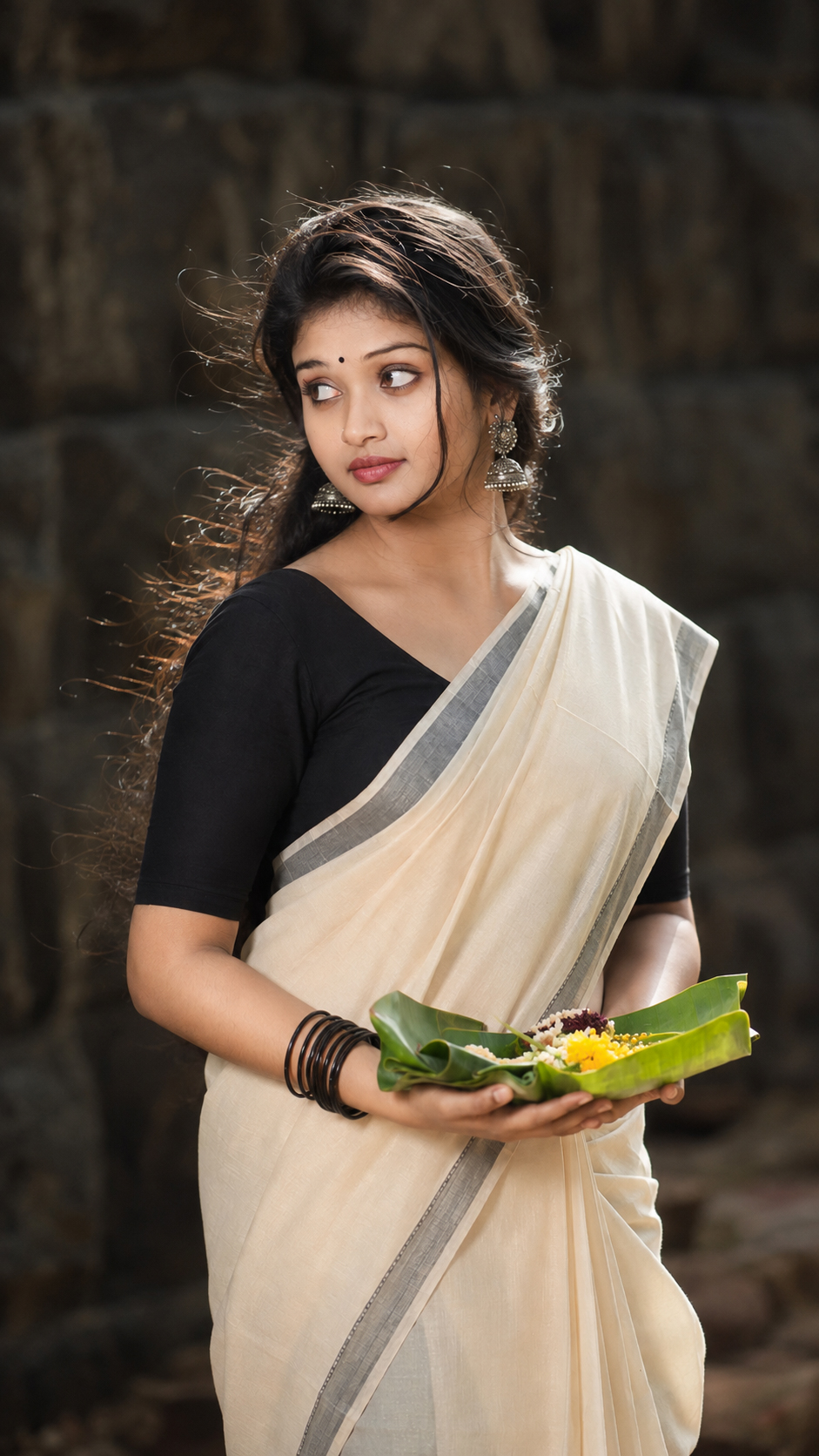
Recreate this exact pose and composition: a young Indian woman standing in a graceful three
quarter pose, body slightly turned away while her face turns toward the camera. Her shoulders are
relaxed, head naturally angled, eyes looking slightly to the side, with a soft closed-mouth smile and
calm, warm expression. Both arms are naturally positioned across the lower body, gently holding a
fresh green banana leaf horizontally in both hands, with a few small traditional flowers/offerings on
it.
She wears an off-white/cream Kerala saree with a subtle silver-grey border and a simple black short
sleeved blouse. Natural saree folds and realistic fabric texture. Add elegant traditional jhumka
earrings and several simple black bangles.
Hair must match the reference styling: long, thick, naturally flowing dark hair, loose and slightly
messy, blown naturally by a gentle breeze. Fine flyaway strands cross her forehead, cheeks and
partially across her face, while the rest flows behind her. Individual hair strands must look physically
real.
Use soft natural outdoor sunlight, creating realistic highlights on her face, hair and saree.
Background: a dark natural stone wall, softly blurred with authentic optical bokeh.
Photograph it with a professional full-frame DSLR, 85mm portrait lens, f/2.0–f/2.8, realistic depth of
field, natural skin pores, subtle imperfections, true-to-life colors and authentic photographic texture.
9:16 vertical, 16K ultra-high resolution, photorealistic.
Avoid: AI look, plastic/waxy skin, beauty filter, excessive HDR, oversmoothing, face alteration,
unrealistic hands/fingers, distorted jewelry, artificial hair, exaggerated smile, unnatural anatomy,
oversaturated colors, CGI or painted appearance, text or watermark.
Priority: exact identity + exact pose + same expression + same hairstyle + same clothing style +
completely natural real-photograph appearance.
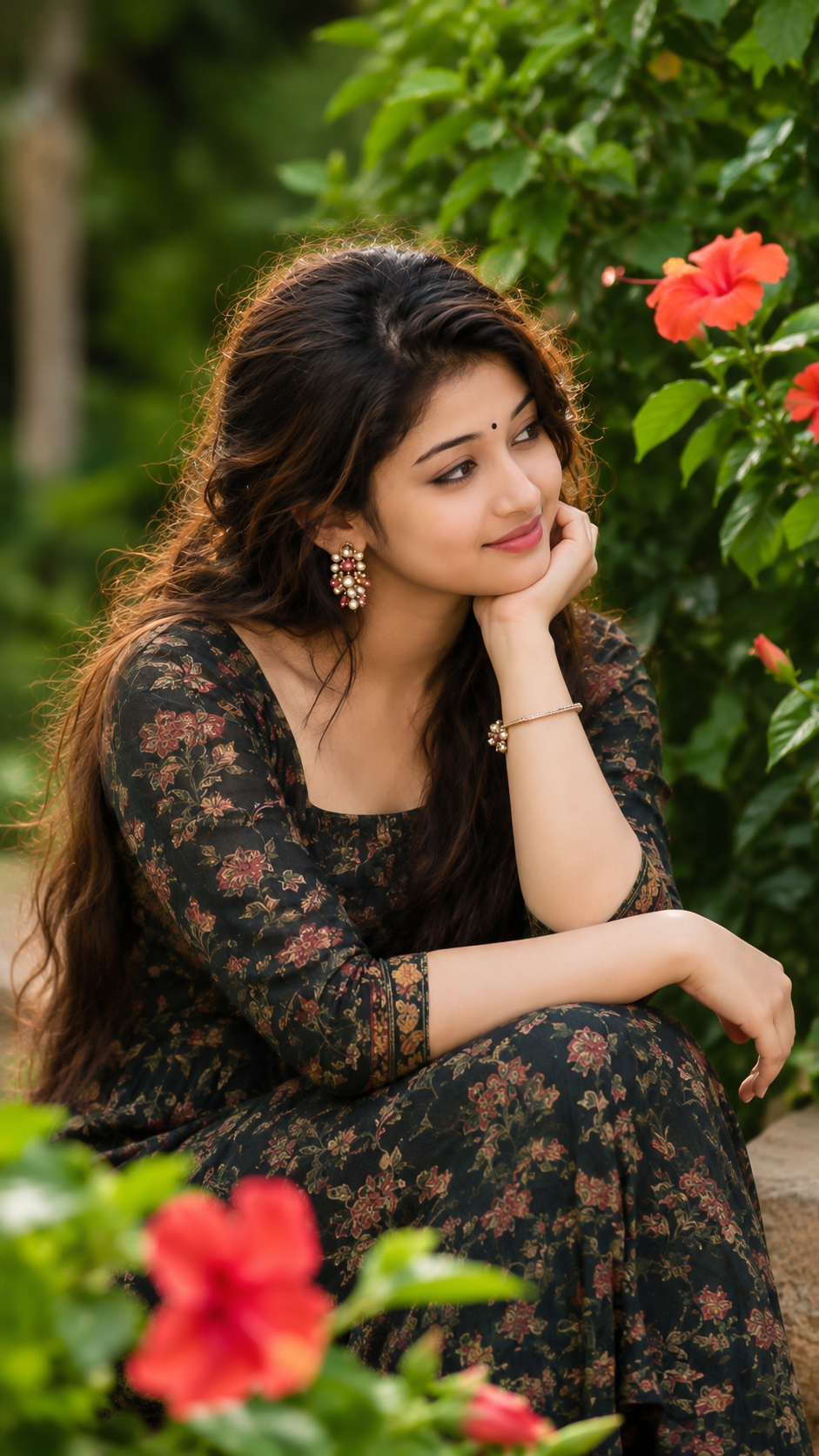
This breakdown is drawn from the wording of the prompt above. It helps you identify which visual instructions to keep consistent and which ones you may want to adjust.
Subject and identity: Preserve her exact face shape, eyes, eyebrows, nose, lips, skin tone, age, proportions, and
Clothing and styling: She wears an off-white/cream Kerala saree with a subtle silver-grey border and a simple black short Natural saree folds and realistic fabric texture.
Pose and composition: Recreate this exact pose and composition: a young Indian woman standing in a graceful three quarter pose, body slightly turned away while her face turns toward the camera.
Setting and background: Background: a dark natural stone wall, softly blurred with authentic optical bokeh.
Lighting and colour: Use soft natural outdoor sunlight, creating realistic highlights on her face, hair and saree.
Camera and photography: Create an ultra-realistic natural DSLR portrait using the uploaded girl as the exact facial identity Photograph it with a professional full-frame DSLR, 85mm portrait lens, f/2.
How to Customize This Prompt
This prompt is a starting point. Keep the instructions that define the intended subject and visual direction, then adjust selected details to create a version that matches your project.
Elements covered in this prompt: reference identity, clothing and styling, pose and expression, setting and background, lighting and colour, camera and framing. Keep the elements that matter to your intended result, and edit only the details you want to explore.
Ideas to Try
Reference image and identity: use a clear reference image when the same person must remain recognizable. If you want a different subject, replace the reference and remove any identity-lock wording that no longer applies.
Clothing and styling: change one specific item at a time—such as garment colour, fabric, drape or jewellery—so you can compare the result without changing the whole scene.
Pose and expression: experiment with one detail at a time, such as gaze direction, hand placement, posture or the distance between subjects. Keep the main composition if it is important to the result.
Setting and background: try a different location, backdrop or level of background detail while keeping the main subject easy to identify.
Lighting and colour: change the light source or direction first. Then refine warmth, contrast, colour balance and shadow softness.
Camera and framing: test a different crop, camera angle or depth of field. Lens and camera specifications act as visual guidance; image generators do not reproduce physical camera settings consistently.
How to Use It
Copy the prompt and paste it into your preferred AI image generator.
If the prompt refers to a reference photo, upload it only if your chosen tool supports image references.
Generate a first result, compare it with the intended subject and composition, then revise one visual detail at a time.
Make Changes Carefully
For a useful comparison, save the original wording and change one major element per attempt. This makes it easier to see whether the change improved the result. Different AI tools may interpret the same wording differently, so review the output rather than expecting identical results.