🔥 TRENDING · Women
Dark Cinematic Black & White Portrait – Extreme Low-Key Split Lighting AI Photo Prompt
Prompt
Use the uploaded photograph of the girl as the primary and strict facial identity reference.
Recreate the exact same girl with maximum possible facial identity accuracy.
Preserve her original:
- Face shape and facial structure.
- Forehead, eyebrows and eyes.
- Original nose shape and lips.
- Cheekbones, jawline and chin.
- Natural skin texture and complexion.
- Hairline and recognizable facial features.
Do not modify, beautify, reshape or replace her facial identity.
2. EXTREME SIDE PROFILE – CRITICAL
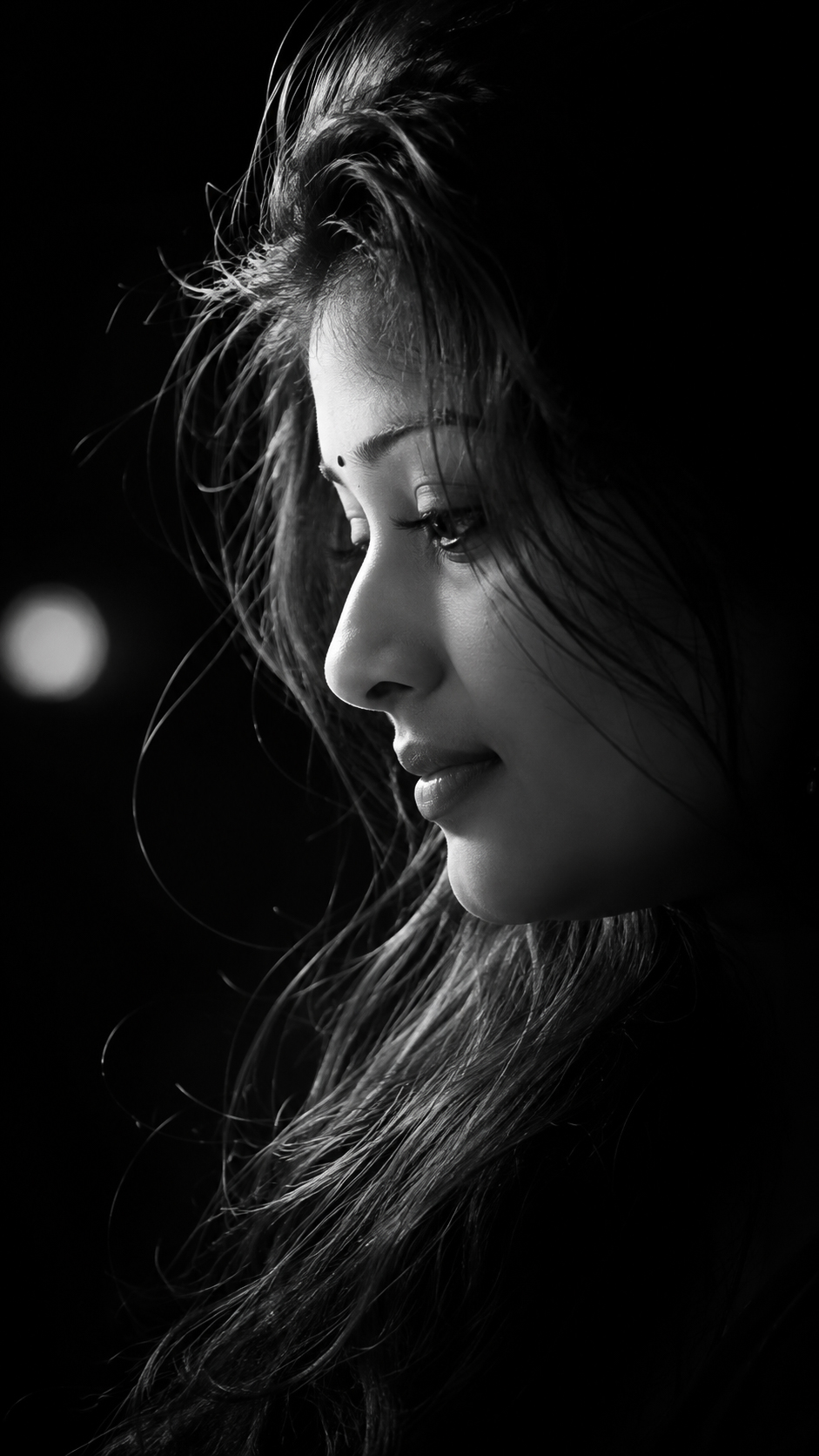
Recreate the exact side-profile composition of the Pinterest reference.
- Genuine 90-degree side-profile portrait.
- Girl facing towards the LEFT side of the frame.
- Only one side-profile view of her face.
- Nose, lips, chin and forehead clearly forming the side silhouette.
- Head naturally positioned, with a slightly lowered and thoughtful expression.
- Eye looking towards the left, partially concealed by shadow.
- Subject positioned on the RIGHT half of the vertical composition.
- Leave substantial negative space on the LEFT.
- Extreme close-up framing, capturing the head, face and flowing hair.
- Do not rotate the face towards the camera.
- Do not create a three-quarter portrait or front-facing portrait.
3. EXTREME SPLIT LIGHTING – MOST IMPORTANT
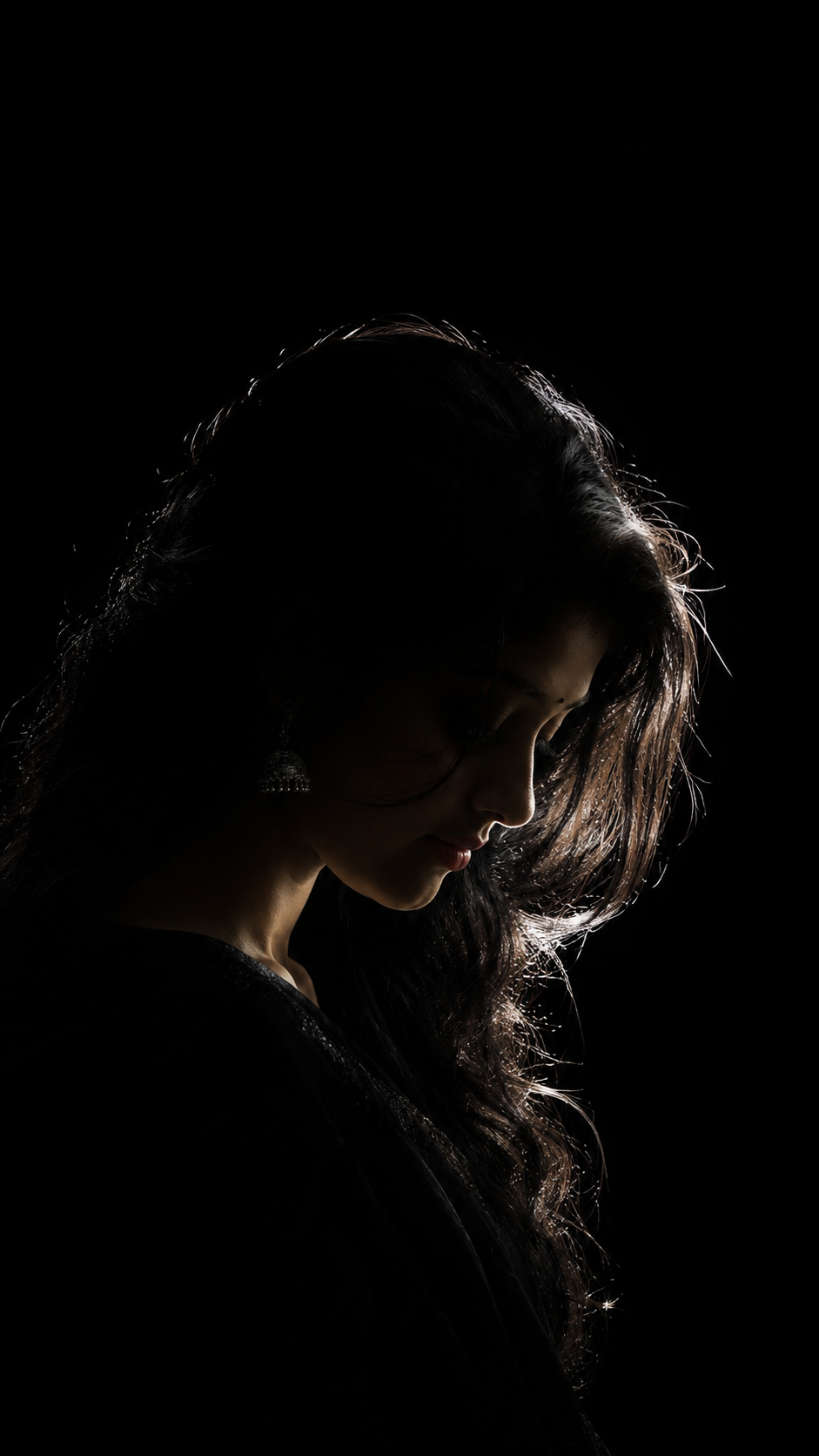
Create dramatic, asymmetric, extreme low-key portrait lighting.
ONE SIDE SOFTLY ILLUMINATED – OTHER SIDE ALMOST COMPLETELY BLACK.
- Use a single narrow, soft directional light source positioned towards the LEFT FRONT of the girl's face.
- Illuminate only the visible side-profile-facing contours.
- Soft silver-white light gently touches the forehead, eyebrow, nose bridge, nose tip, lips, front cheek and chin.
- Create a beautiful delicate highlight along the nose and lips.
- Allow a little light to reveal natural eye and eyelash details.
- The illuminated side should have soft, controlled highlights, not harsh white exposure.
- The opposite side of her face must fall into extremely deep black shadow.
- Keep the far side of the forehead, eye, cheek and jaw almost invisible.
- Create a dramatic transition from soft silver illumination into absolute darkness.
IMPORTANT: Do not illuminate the entire face. Do not use balanced two-sided lighting. Do not create beauty lighting. The lighting must reveal only one side of the face, while the other side disappears into darkness.
4. BEAUTIFUL ONE-SIDED HAIR ILLUMINATION
Hair lighting must follow the same directional lighting pattern as the face.
- Illuminate only selected strands on the light-facing side.
- Let the opposite side of her hair disappear naturally into the black background.
- Create beautiful silver-white highlights along selected hair strands.
- Preserve the natural dark appearance of the majority of the hair.
- A subtle rim light should separate a few strands from the background.
5. ULTRA-THIN SILKY HAIR STROKES – SIGNATURE DETAIL
Create extremely fine, delicate, silky-smooth individual hair strands.
- Long, naturally flowing hair.
- Numerous ultra-thin individual flyaway strands.
- Fine silky strands gently sweeping across the forehead, cheek and near the lips.
- A few strands falling naturally in front of the nose and face.
- Delicate curved hair strokes with organic movement.
- Extremely fine silver highlights along selected individual strands.
- Softly illuminated wispy hair against the dark background.
- Beautiful natural separation between each strand.
- Fine, glossy, silky texture with realistic individual hair detail.
Hair should look like delicate, fine silk threads, not thick locks or artificial painted lines.
Some strands should catch the light beautifully while others completely disappear into the shadows.
6. ABSOLUTELY DARK BACKGROUND
- Almost pure black background.
- Deep, rich black shadows.
- No visible surroundings or objects.
- One small, soft, circular white bokeh light on the LEFT side of the frame.
- The bokeh must be heavily defocused.
- No ambient background illumination.
- No grey gradients or bright surroundings.
The background must remain darker than every illuminated part of the subject.
7. CINEMATIC BLACK & WHITE TONAL GRADING
- Pure artistic monochrome photography.
- Deep blacks and delicate silver highlights.
- High contrast with smooth tonal transitions.
- Soft luminous skin highlights.
- Beautiful dark hair texture.
- Natural grayscale skin tones.
- Rich shadow depth.
- Classic silver-gelatin fine-art photography aesthetic.
8. PROFESSIONAL PHOTOGRAPHIC DETAILS
Captured with a professional full-frame camera and an 85mm portrait lens.
- Aperture: f/1.4.
- Extremely shallow depth of field.
- Precise focus on the illuminated facial profile.
- Individual hair strands rendered with exceptional detail.
- Natural optical background blur.
- Realistic skin pores and facial texture.
- Professional low-key studio photography.
- High dynamic range.
- Ultra-realistic 8K image quality.
9. STRICT NEGATIVE PROMPT
No front-facing face, no three-quarter angle, no symmetrical lighting, no two-sided illumination, no bright face, no fully illuminated hair, no bright background, no visible environment, no thick hair strokes, no tangled hair, no artificial hair texture, no plastic skin, no face reshaping, no excessive beauty retouching, no colour, no illustration, no painting, no CGI, no text, no watermark.
FINAL REFERENCE MATCH INSTRUCTION
The final image must closely resemble the supplied Pinterest reference photograph.
Reproduce its distinctive visual identity:
ONE-SIDED FACE PROFILE + ONE-SIDED SOFT SILVER LIGHT + OPPOSITE SIDE DISAPPEARING INTO BLACK + SELECTIVELY ILLUMINATED ULTRA-THIN SILKY HAIR STRANDS + ABSOLUTELY DARK BACKGROUND + ONE SMALL LEFT-SIDE WHITE BOKEH LIGHT.
The face must be visible only from its illuminated side-profile contours. The opposite half must remain deeply shadowed.
The hair must have beautiful, delicate, extremely thin individual strands catching the silver light, creating natural flowing strokes against the darkness.
Do not reinterpret the composition. Match the reference photography style as closely as possible while preserving the uploaded girl's identity.
ASPECT RATIO: 9:16 ORIENTATION: VERTICAL QUALITY: ULTRA-REALISTIC 8K PHOTOGRAPHY: EXTREME LOW-KEY BLACK & WHITE FINE ART