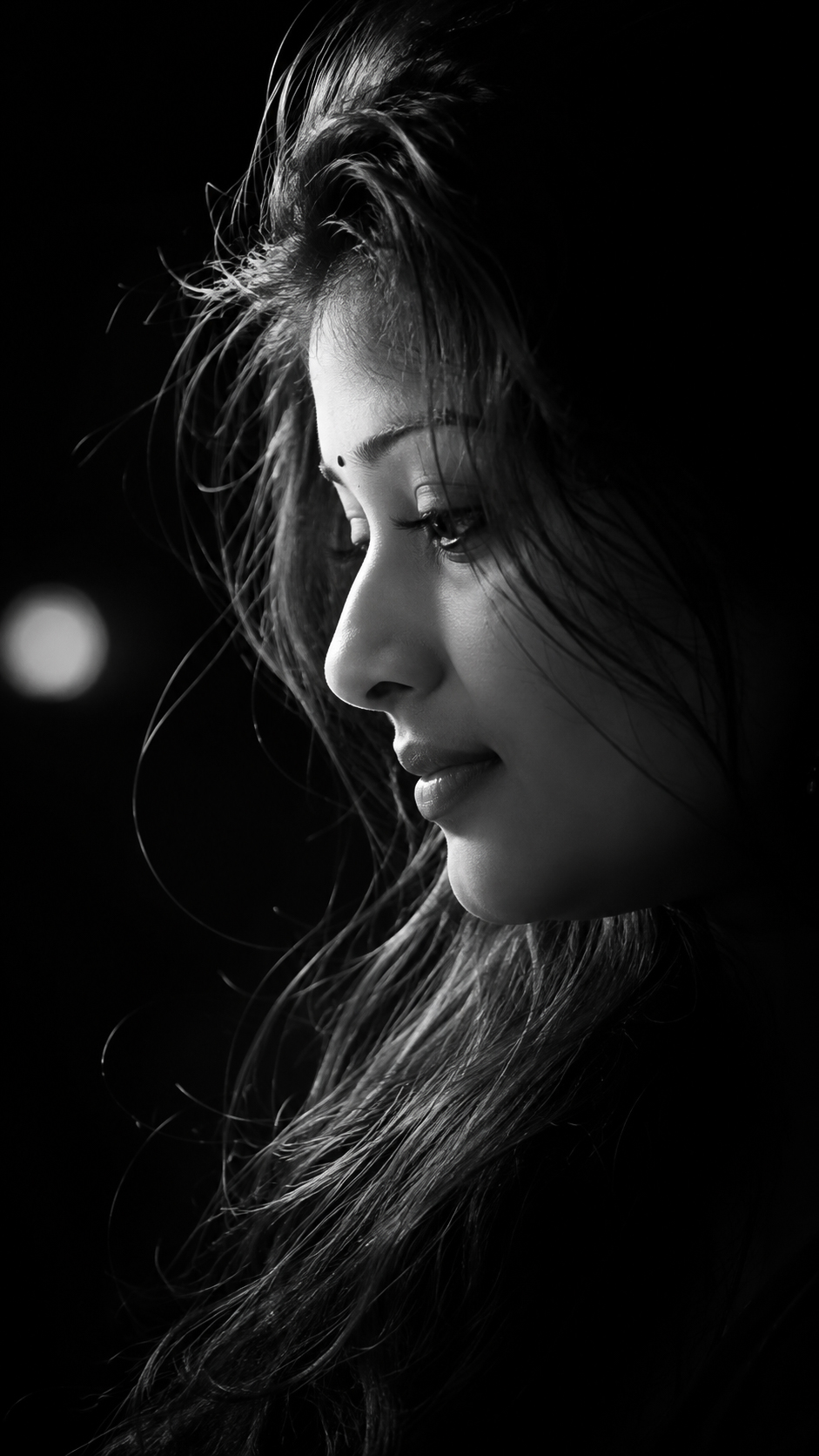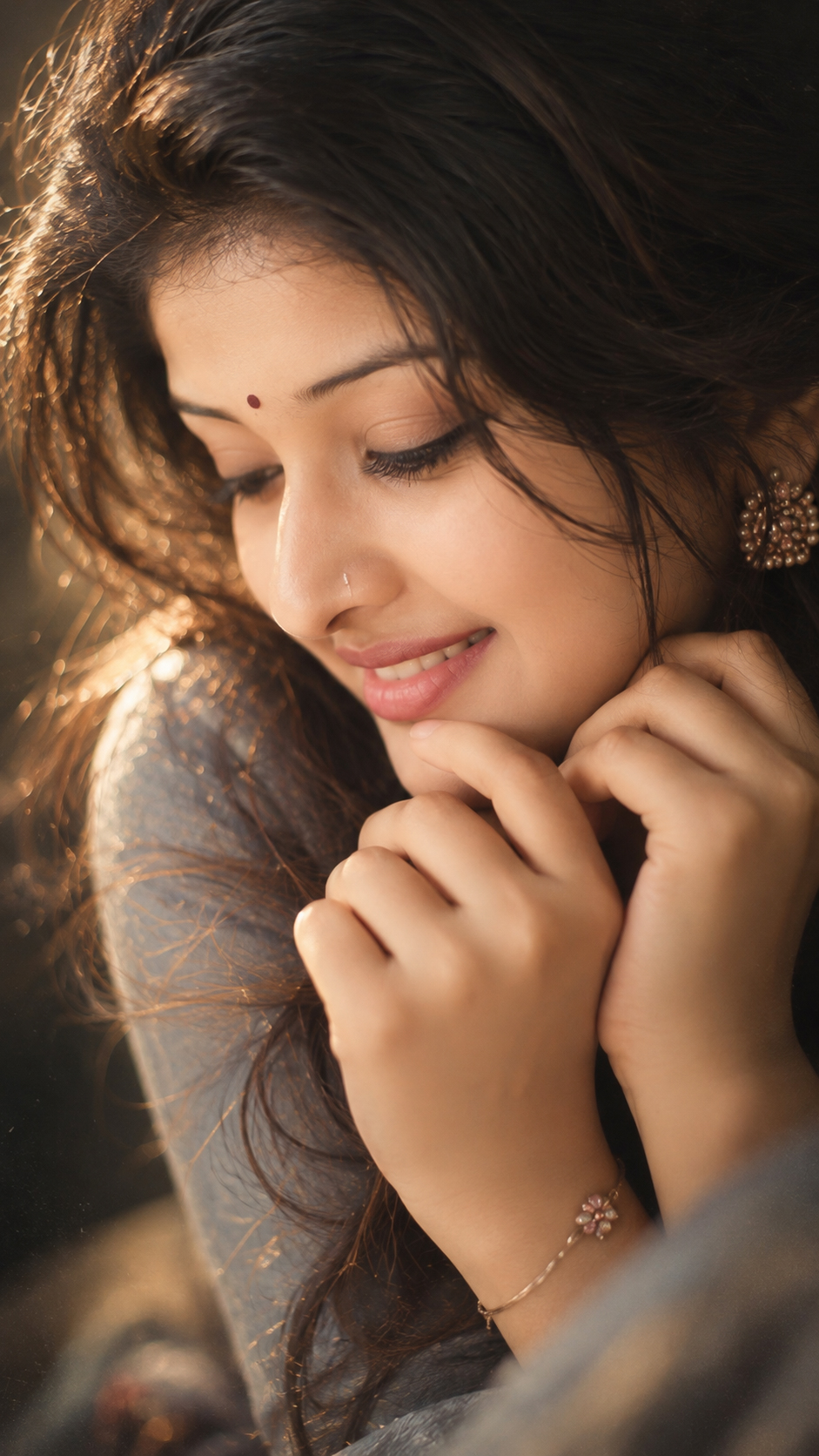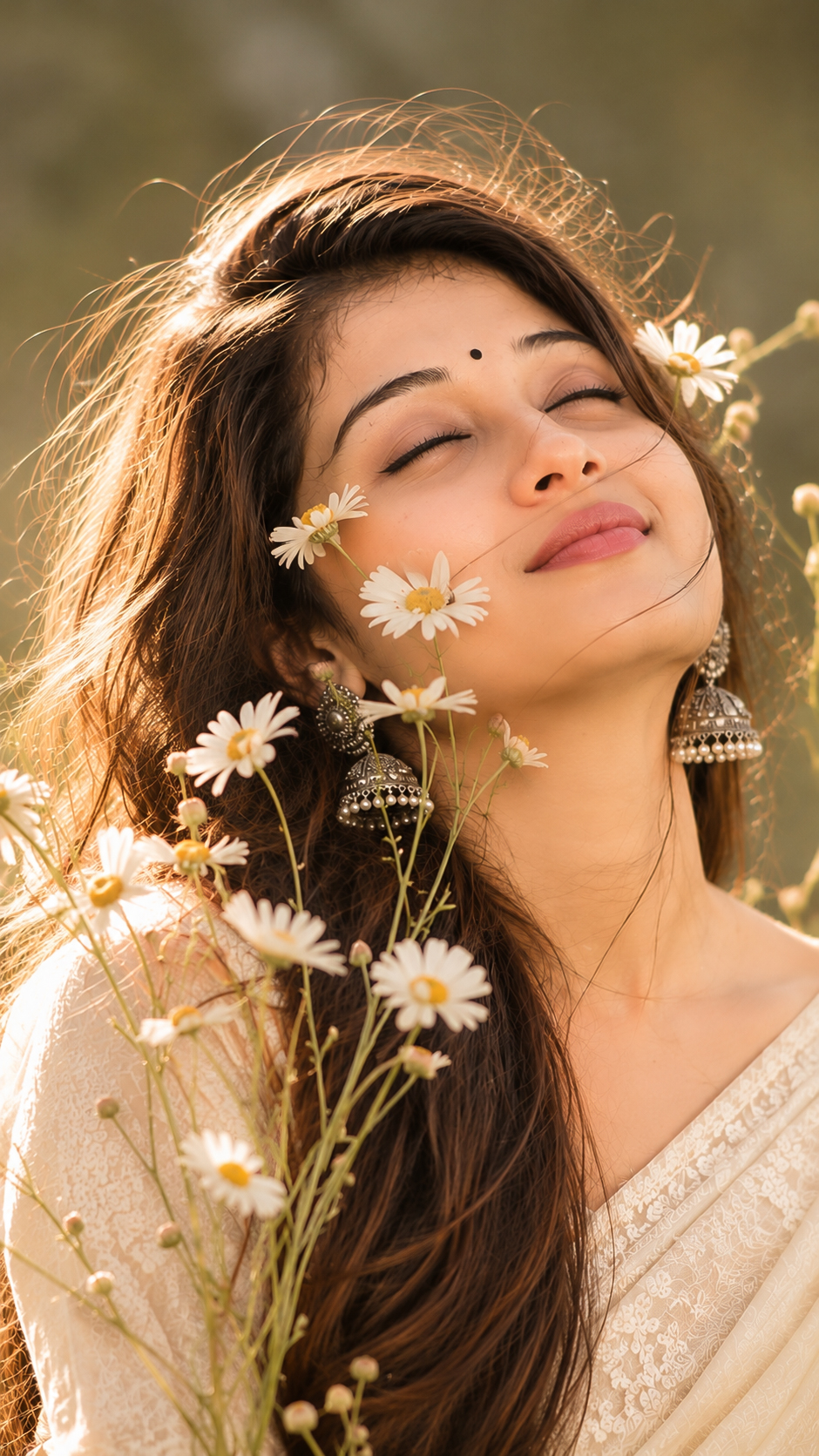
Use the uploaded girlβs photo as the exact facial identity reference. Preserve her natural face, facial structure, skin tone, eyes, eyebrows, nose, lips, smile characteristics and overall identity accurately. Do not replace, redesign or beautify her face.
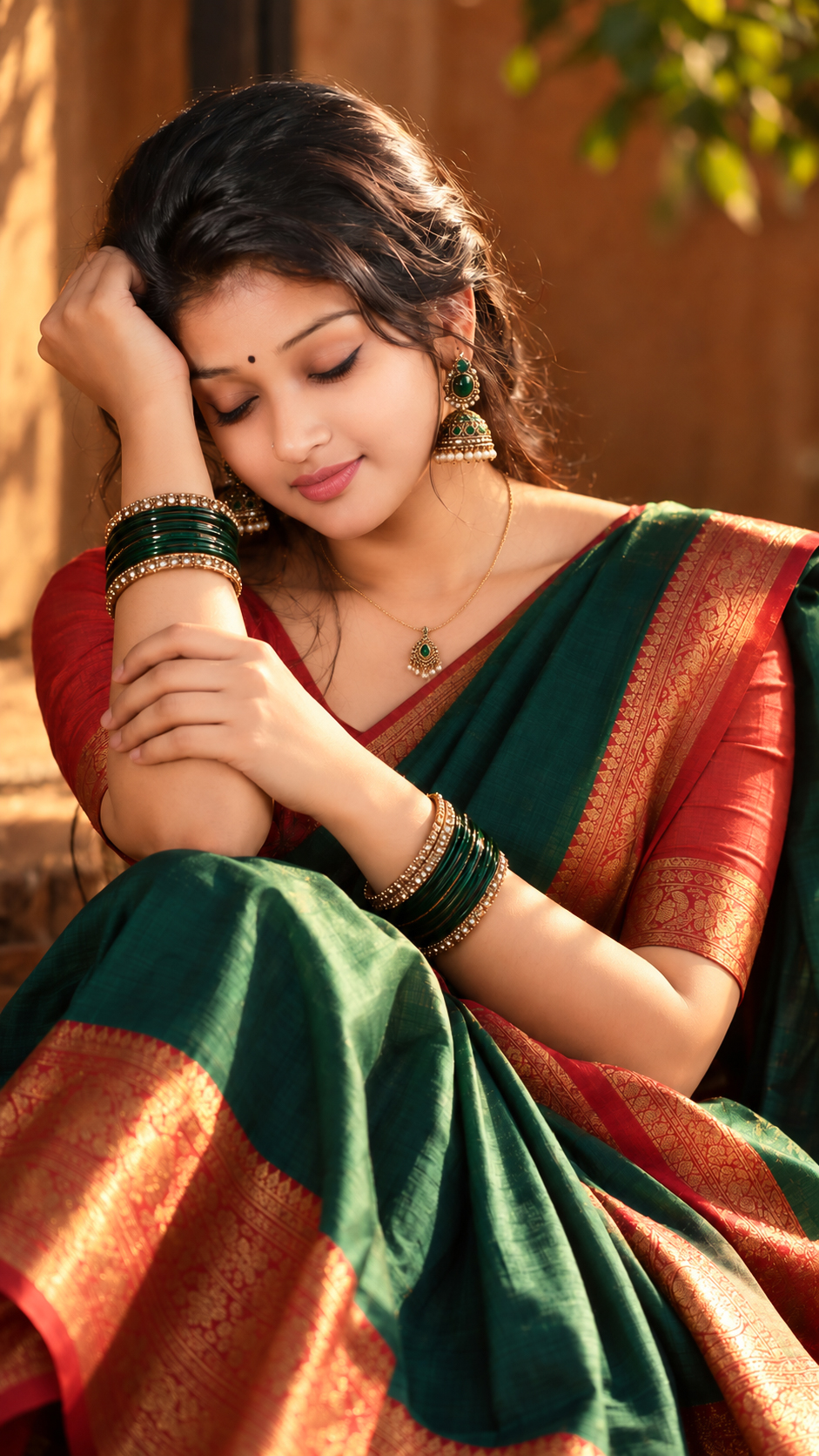
Create an ultra-realistic cinematic close-up portrait inspired by the reference composition. The woman is seated gracefully in an intimate, relaxed pose. Her head is gently tilted toward her raised forearm, with the side of her forehead softly resting against the back of her hand/wrist. Her eyes are peacefully closed and she has a beautiful, gentle natural smile, creating a warm, shy and serene expression.
Her opposite hand reaches across naturally and softly holds the raised wrist/forearm, exactly creating the elegant crossed-arm composition. Keep the shoulders relaxed, fingers naturally curved and anatomy completely realistic.
Dress her in a rich deep emerald-green silk saree with a luxurious red-and-gold traditional zari border, paired with a deep red fitted blouse with subtle traditional detailing. The green saree should drape naturally across her body and fill the lower foreground with beautiful folds and realistic silk texture.
Accessories: large traditional antique-gold jhumka earrings decorated with emerald-green stones and tiny pearl drops, multiple dark emerald-green glass bangles mixed with delicate antique-gold stone-studded bangles on both wrists, a simple elegant suitable traditional necklace, and a tiny black bindi centered between the eyebrows.
Hair: long, naturally dark black hair, softly side-parted and swept back in a relaxed traditional hairstyle, with a few delicate loose strands around the cheeks, ear and neck. Keep realistic individual hair strands and natural volume.
Use warm golden-hour sunlight coming strongly from one side, creating beautiful golden highlights across her face, cheekbones, nose, arms, bangles and hair. Include soft realistic shadows and subtle bands of sunlight across the arms. The skin should glow naturally while retaining real pores, fine facial texture and realistic tonal variation.
Background: simple warm earthy brown/terracotta wall, heavily softened by shallow depth of field, with a subtle hint of dark green foliage near the upper corner. Keep the background minimal so all attention remains on her expression and pose.
Photography style: premium professional Indian fashion/editorial photography, full-frame DSLR look, 85mm portrait lens, f/1.8, extremely shallow depth of field, tack-sharp eyelashes, jewelry and facial details, creamy background separation, realistic HDR dynamic range, cinematic highlight roll-off, rich but natural colors, realistic silk and jewelry reflections, high micro-detail, professional color grading, photorealistic skin, DSLR RAW quality, ultra-high-resolution appearance.
Composition: intimate close-up/half-body vertical portrait, face positioned prominently in the upper-middle frame, arms forming an elegant diagonal composition, saree folds visible in the lower foreground. 9:16 vertical aspect ratio.
Important: Preserve the uploaded girl's exact recognizable identity. Keep the same head tilt, closed-eye expression, gentle smile, forehead-to-hand position, opposite hand holding the wrist, body posture, hairstyle, saree colors, jewelry styling and overall composition described above. No artificial beauty filter, no excessive skin smoothing, no plastic skin, no facial reshaping, no exaggerated makeup, no distorted hands, no extra fingers, no warped jewelry, no cartoon or AI-generated appearance. The final result must look like a genuine photograph captured by a professional DSLR camera
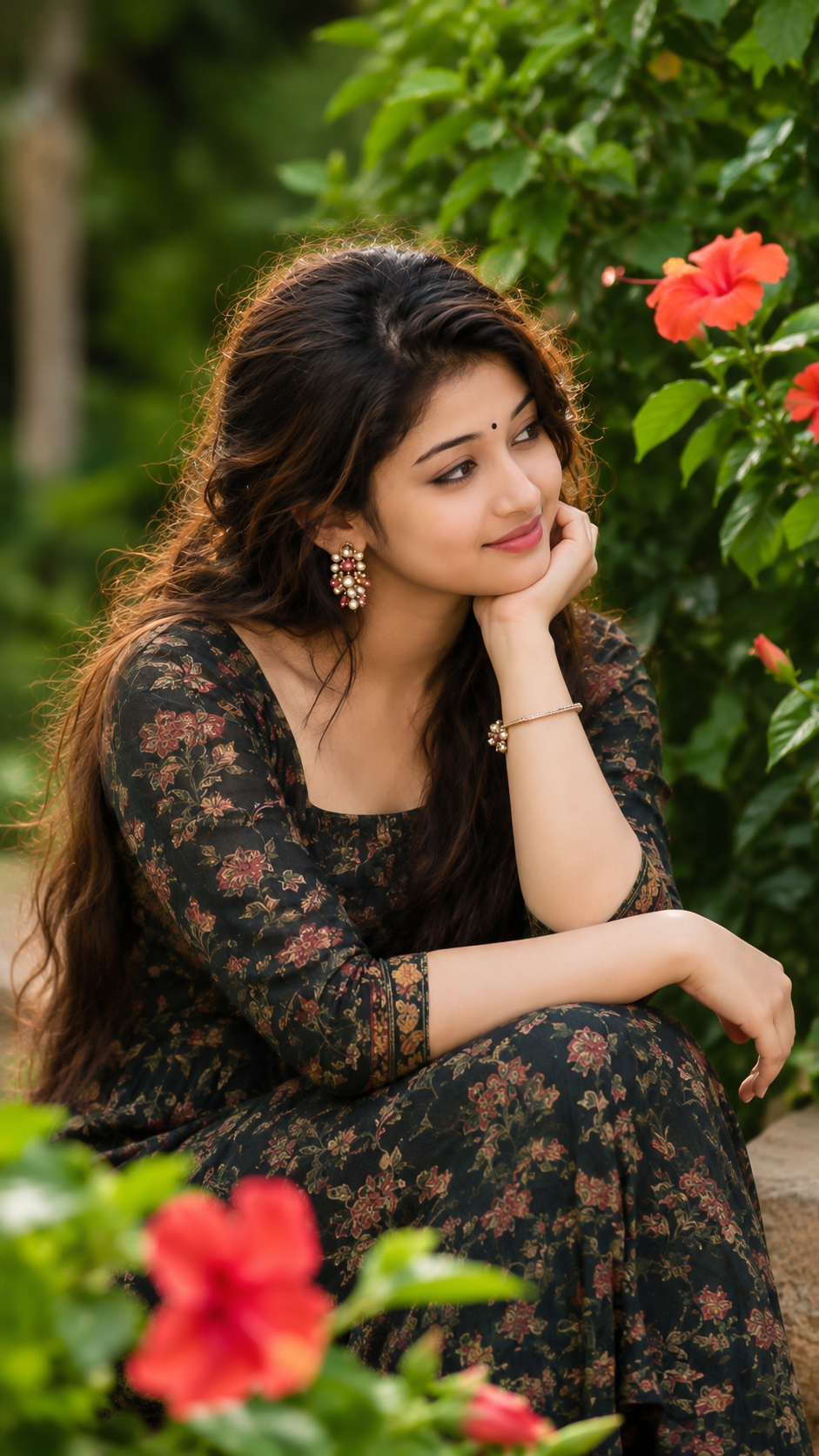
This breakdown is drawn from the wording of the prompt above. It helps you identify which visual instructions to keep consistent and which ones you may want to adjust.
Subject and identity: Use the uploaded girlβs photo as the exact facial identity reference. Preserve her natural face, facial structure, skin tone, eyes, eyebrows, nose, lips, smile characteristics and overall identity accurately.
Clothing and styling: Dress her in a rich deep emerald-green silk saree with a luxurious red-and-gold traditional zari border, paired with a deep red fitted blouse with subtle traditional detailing. The green saree should drape naturally across her body and fill the lower foreground with beautiful folds and realistic silk texture.
Pose and composition: Create an ultra-realistic cinematic close-up portrait inspired by the reference composition. The woman is seated gracefully in an intimate, relaxed pose.
Setting and background: Background: simple warm earthy brown/terracotta wall, heavily softened by shallow depth of field, with a subtle hint of dark green foliage near the upper corner.
Lighting and colour: Use warm golden-hour sunlight coming strongly from one side, creating beautiful golden highlights across her face, cheekbones, nose, arms, bangles and hair. Include soft realistic shadows and subtle bands of sunlight across the arms.
Camera and photography: Photography style: premium professional Indian fashion/editorial photography, full-frame DSLR look, 85mm portrait lens, f/1. 8, extremely shallow depth of field, tack-sharp eyelashes, jewelry and facial details, creamy background separation, realistic HDR dynamic range, cinematic highlight roll-off, rich but natural colors, realistic silk and jewelry reflections, high micro-detail, professional color grading, photorealistic skin, DSLR RAW quality, ultra-high-resolution appearance.
How to Customize This Prompt
This prompt is a starting point. Keep the instructions that define the intended subject and visual direction, then adjust selected details to create a version that matches your project.
Elements covered in this prompt: reference identity, clothing and styling, pose and expression, setting and background, lighting and colour, camera and framing. Keep the elements that matter to your intended result, and edit only the details you want to explore.
Ideas to Try
Reference image and identity: use a clear reference image when the same person must remain recognizable. If you want a different subject, replace the reference and remove any identity-lock wording that no longer applies.
Clothing and styling: change one specific item at a timeβsuch as garment colour, fabric, drape or jewelleryβso you can compare the result without changing the whole scene.
Pose and expression: experiment with one detail at a time, such as gaze direction, hand placement, posture or the distance between subjects. Keep the main composition if it is important to the result.
Setting and background: try a different location, backdrop or level of background detail while keeping the main subject easy to identify.
Lighting and colour: change the light source or direction first. Then refine warmth, contrast, colour balance and shadow softness.
Camera and framing: test a different crop, camera angle or depth of field. Lens and camera specifications act as visual guidance; image generators do not reproduce physical camera settings consistently.
How to Use It
Copy the prompt and paste it into your preferred AI image generator.
If the prompt refers to a reference photo, upload it only if your chosen tool supports image references.
Generate a first result, compare it with the intended subject and composition, then revise one visual detail at a time.
Make Changes Carefully
For a useful comparison, save the original wording and change one major element per attempt. This makes it easier to see whether the change improved the result. Different AI tools may interpret the same wording differently, so review the output rather than expecting identical results.