🔥 TRENDING · Stylish
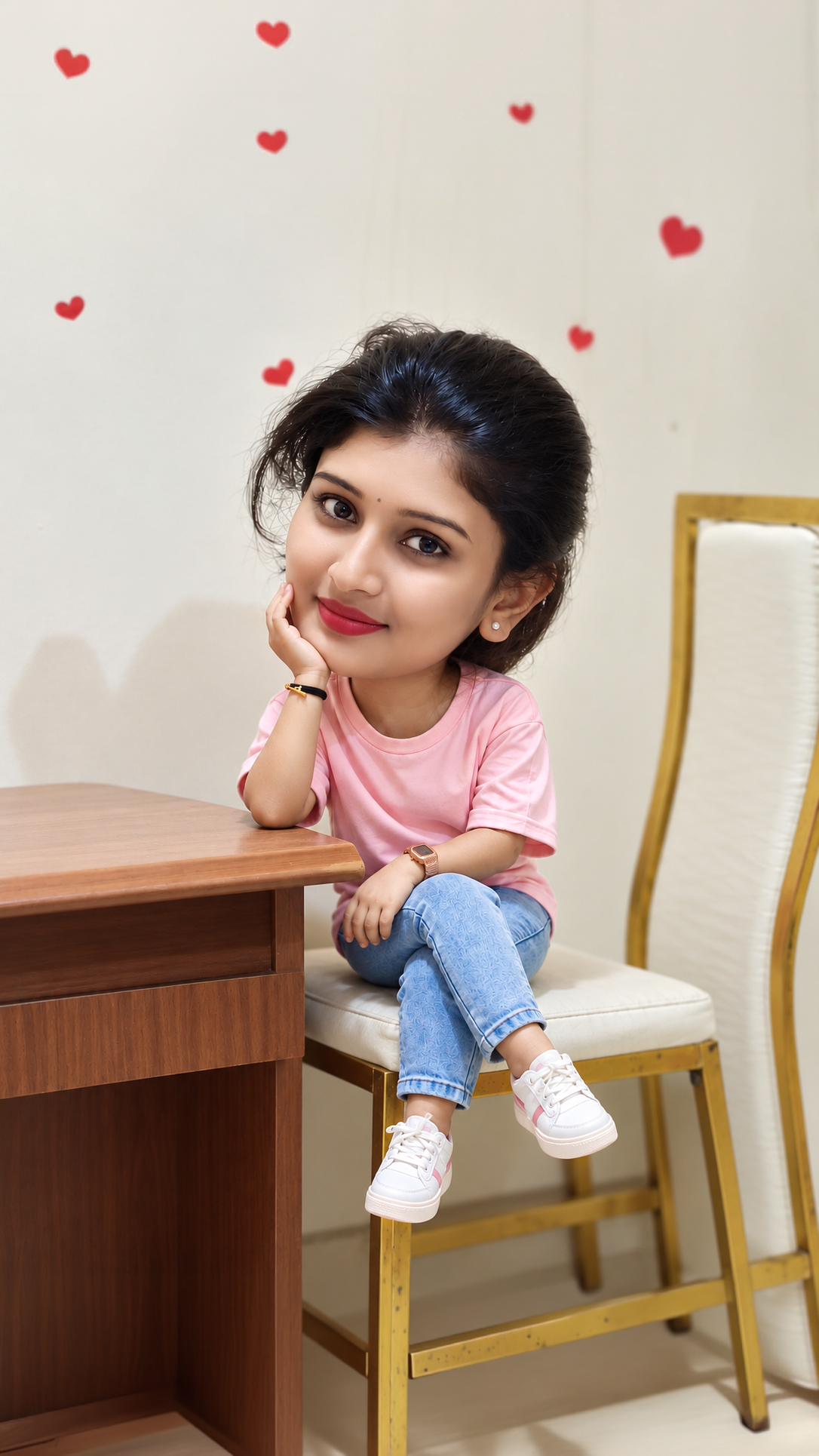
✨ Ultra-Realistic Miniature Big-Head, Small-Body Portrait Prompt
Prompt
SCENE AND BACKGROUND PRESERVATION
Use the uploaded reference image as the primary guide for the entire scene and background. Reproduce the original environment as faithfully as possible, maintaining its spatial arrangement, composition, camera angle, perspective, architectural details, lighting direction, highlights, shadows, surrounding objects, and overall atmosphere.
Preserve the existing background rather than inventing or replacing it with a new setting. Windows, tables, chairs, beds, decorations, accessories, plants, buildings, and all other environmental elements must retain their natural, realistic proportions and original positions wherever possible.
SUBJECT TRANSFORMATION — EXTREMELY IMPORTANT
Transform the person or subject in the reference image into an ultra-realistic miniature figure featuring an enormously oversized head and a dramatically reduced body.
The head must remain highly recognizable, preserving the subject's original facial identity, facial structure, eyes, nose, lips, hairstyle, hair texture, silhouette, natural colors, and distinctive identifying characteristics. Maintain authentic facial details and realistic skin texture.
Exaggerate the head-to-body ratio far beyond ordinary proportions. The head should appear strikingly larger than a conventional chibi or cute miniature character, while the body becomes a much smaller part of the overall figure.
Create a compact, tiny torso with narrow shoulders and short, slim limbs. Reduce the arms, hands, legs, and feet proportionally to complement the miniature body. The contrast between the oversized realistic head and the tiny body must be immediately noticeable.
REALISM — NOT CARTOON OR ORDINARY CHIBI
This transformation must not resemble a conventional cartoon, illustrated character, toy, or stylized doll. The intended result is a realistic human head combined with a miniature human body, placed naturally within a full-sized, photorealistic environment.
Keep the head anatomically recognizable and lifelike. Avoid making the head too small, the body too large, or the limbs bulky. Do not introduce cartoon-like facial features or exaggerated artificial textures.
NATURAL INTERACTION WITH THE ENVIRONMENT
The miniature subject must occupy only a reasonable portion of the frame, leaving enough surrounding space to establish the contrast between the tiny figure and the normal-sized environment.
Maintain realistic scale relationships between the subject and the surrounding furniture, doors, windows, beds, tables, chairs, buildings, and other objects. The environment must remain full-sized; only the subject's body proportions should be transformed.
The subject may naturally stand, sit, walk, lean, or lie down according to the original scene and pose. Ensure believable physical contact with the floor, furniture, tabletop, or bed surface, as appropriate. Add natural contact shadows, ambient shading, and realistic light interaction to prevent the subject from appearing pasted onto the image or floating unnaturally.
LIGHTING, MATERIALS AND PHOTOGRAPHIC STYLE
Retain the lighting character of the reference image, including its natural illumination, light direction, highlight placement, shadow intensity, and overall balance between bright and dark areas.
Use realistic materials, authentic surface textures, natural skin detail, and physically consistent shadows. Apply a subtle shallow depth of field where appropriate, keeping the image clean and visually coherent without sacrificing the subject's recognizable facial details.
The final result should resemble a genuine photograph captured in a real-life setting, with natural lighting, realistic proportions between the miniature subject and the full-sized surroundings, and convincing integration into the original scene.
FINAL REQUIREMENTS
- Preserve the original scene, background, composition, and photographic atmosphere.
- Maintain the subject's recognizable facial identity and defining features.
- Create an extremely exaggerated big-head, tiny-body proportion.
- Keep the body, arms, legs, hands, and feet miniature and slim.
- Maintain normal environmental scale and realistic perspective.
- Ensure natural positioning, physical contact, and believable shadows.
- Avoid cartoonization, conventional chibi proportions, bulky limbs, oversized bodies, and artificial floating effects.
- Do not replace the original background or introduce an unrelated setting.
- Keep the subject appropriately sized within the frame so the surrounding environment remains clearly visible.
Desired outcome: An ultra-photorealistic portrait featuring a recognizable, lifelike oversized head and an extremely small human body, seamlessly integrated into the original full-scale environment.