🔥 TRENDING · Traditional
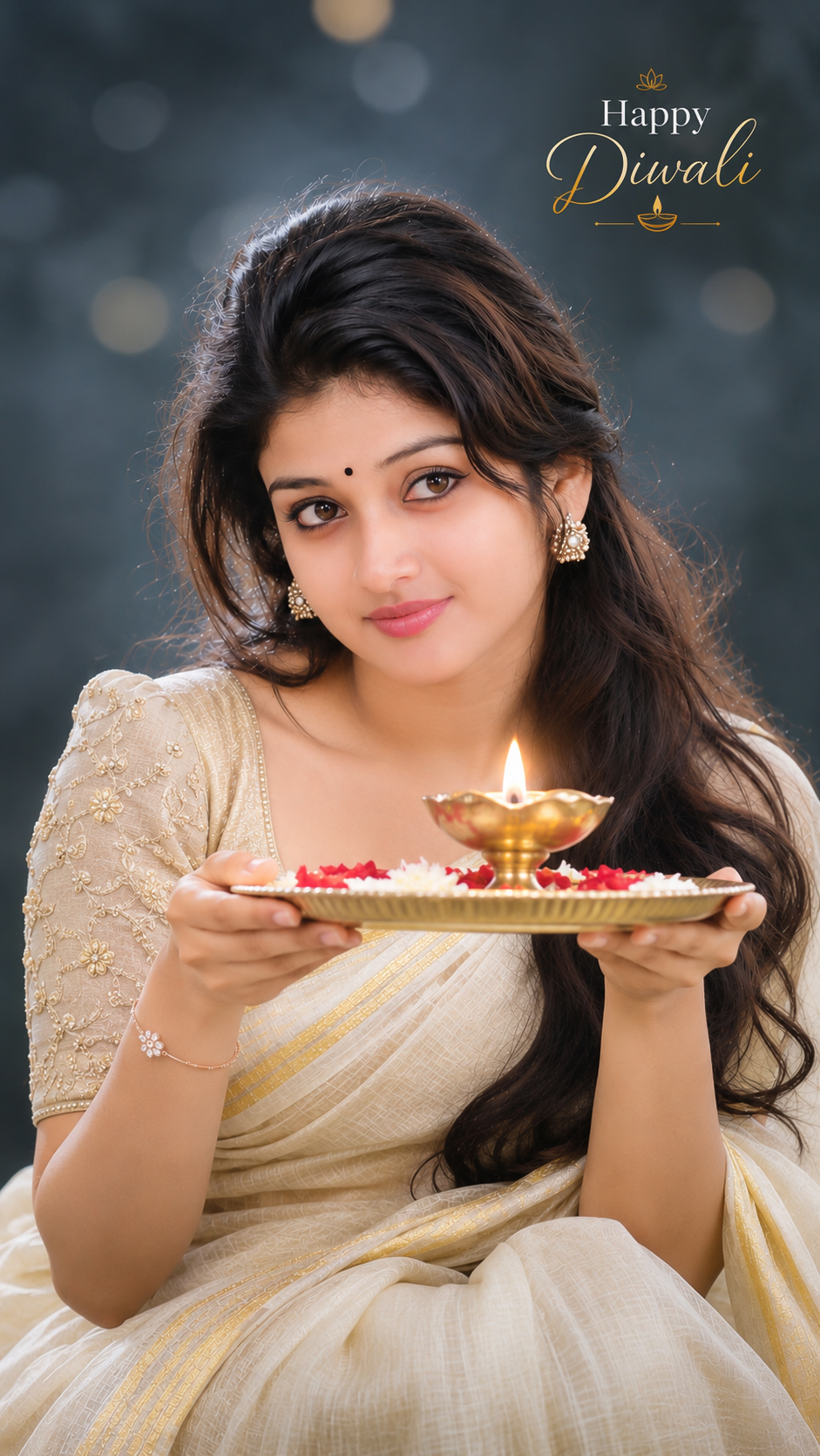
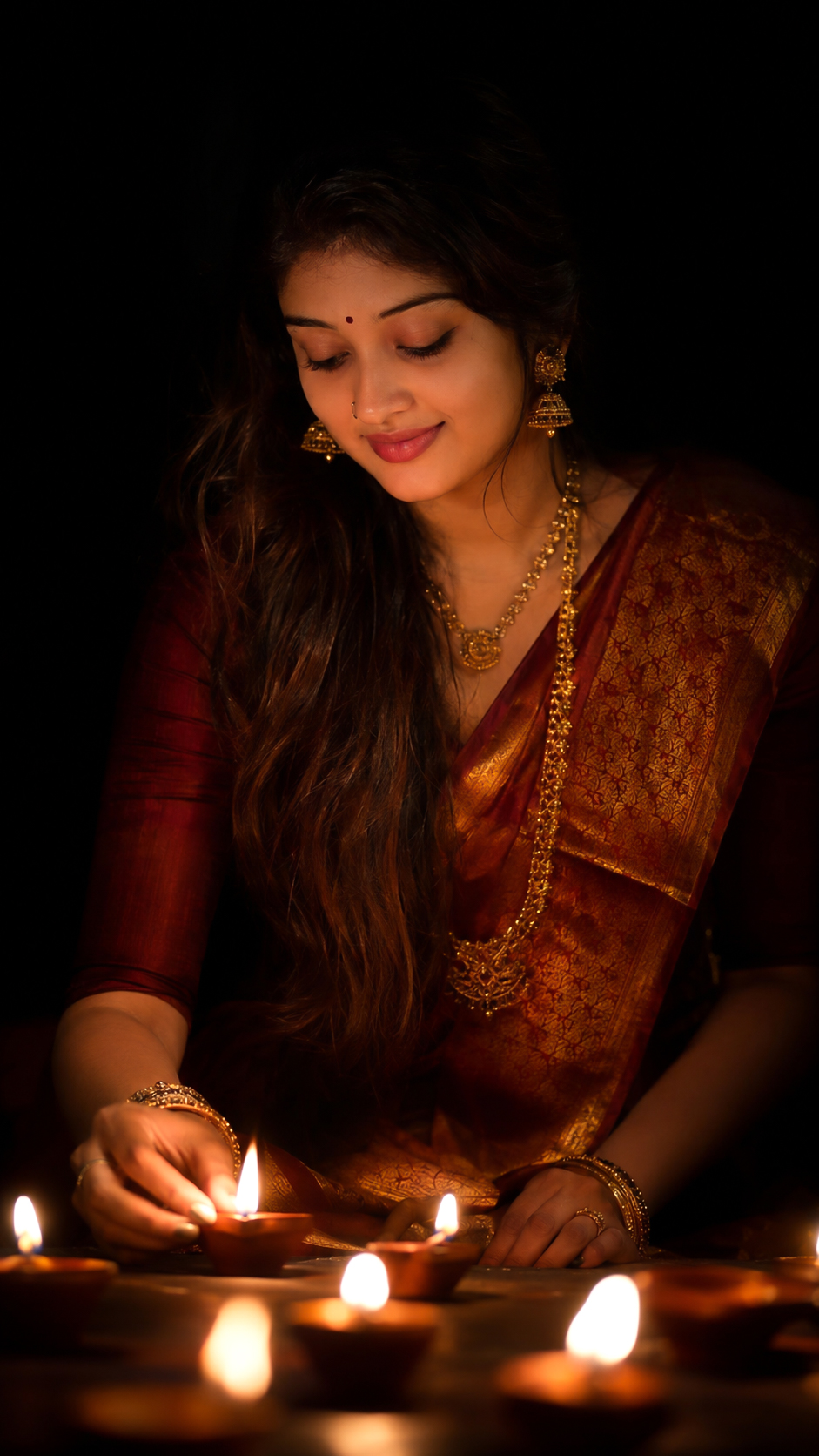
Diwali AI Photo Prompts – Create Cinematic Traditional Indian Diya Portraits
Prompt
ULTRA-REALISTIC LOW-KEY CINEMATIC DIWALI DIYA PHOTOSHOOT | AUTHENTIC NATURAL FLAME ILLUMINATION | DEEP BLACK BACKGROUND | ELEGANT WINE-MAROON & GOLDEN SILK SAREE | TRADITIONAL SOUTH INDIAN GOLD JEWELLERY | EXTREME LIGHT AND SHADOW CONTRAST | 16K HDR PROFESSIONAL DSLR PHOTOGRAPHY | VERTICAL 9:16
Create an extraordinarily beautiful, ultra-photorealistic cinematic Diwali portrait of the woman in the uploaded reference photograph. Preserve her exact facial identity and natural appearance while capturing an intimate traditional Diwali moment in an extremely dark environment, illuminated exclusively by the gentle natural flame of a small clay diya.
1. EXACT FACIAL IDENTITY PRESERVATION
Use the uploaded reference photograph as the exclusive facial identity reference.
Preserve her exact face shape, eyes, eyebrows, nose, lips, natural skin tone, facial proportions and distinctive features. Maintain her authentic appearance without facial alterations, artificial beautification or excessive skin smoothing.
2. EXACT TRADITIONAL SAREE AND COSTUME
Dress her in an elegant luxurious traditional South Indian silk saree.
- Rich deep wine-maroon silk blouse with elegant short sleeves.
- Beautiful golden-orange silk saree with an intricate antique-gold zari border.
- Traditional gold woven patterns and delicate brocade details.
- Gracefully draped saree pallu falling diagonally across her chest and over her shoulder.
- Natural, realistic silk folds and authentic traditional draping.
Keep the saree colours rich but naturally subdued under the extremely low-light conditions. Do not artificially brighten the fabric.
3. EXQUISITE TRADITIONAL GOLD JEWELLERY
- Traditional antique-gold jhumka earrings.
- Elegant long South Indian gold necklace.
- Beautiful layered traditional gold haram.
- Traditional gold bangles and detailed stone-studded bracelets.
- Delicate gold ring.
- Tiny red bindi.
- Subtle traditional gold nose stud.
Jewellery must have realistic metallic details with only extremely subtle reflections from the diya flame.
4. NATURAL CANDID DIWALI POSE
Capture her sitting gracefully in front of several traditional clay diyas.
Her upper body leans slightly forward naturally.
Her head is gently tilted downwards, with her eyes softly looking towards the small diya she is lighting.
A genuine, peaceful, subtle smile appears on her face.
Her right hand gently holds a small clay diya with a delicate burning flame.
Her left hand rests naturally on the surface beside the other diyas.
Her fingers must be anatomically correct and naturally positioned.
Her long dark hair falls naturally behind her shoulders, blending into the darkness.
Capture a genuinely intimate, unposed moment of lighting a diya.
5. EXTREMELY DARK BACKGROUND – ABSOLUTE PRIORITY
The entire surrounding environment must remain almost completely black.
Create a deep, rich, uninterrupted black background with virtually no visible environmental details.
- No visible room interiors.
- No illuminated walls.
- No decorative lights.
- No colourful background lighting.
- No fairy lights.
- No rim lighting.
- No artificial backlighting.
- No additional light sources.
Her dark hair should naturally disappear into the black background without artificial edge highlights.
The background must remain significantly darker than the woman's face.
6. ONLY NATURAL DIYA FLAME AS THE LIGHT SOURCE – MOST IMPORTANT
Illuminate the photograph exclusively using the small burning diya positioned directly in front of her.
Reproduce the authentic physical behaviour of a tiny oil-lamp flame illuminating a human face in a completely dark environment.
The warm amber-orange flame must produce a very gentle, delicate and naturally falling light onto her face from below.
- Only a small portion of her face should be softly illuminated.
- Her forehead, nose, cheeks and lips should receive subtle, realistic golden highlights.
- Maintain naturally visible facial features without making the face excessively bright.
- Allow parts of her cheeks, jawline and forehead to fall into beautiful natural shadows.
- Keep the eye sockets and surrounding facial contours softly shadowed.
- Preserve realistic skin texture and natural skin colour.
- Create delicate highlights on her jewellery without making it sparkle excessively.
- The saree should remain mostly subdued in the darkness.
- No artificial fill light or studio illumination.
The face must be gently visible, not brightly illuminated. The diya should feel like the only real source of light in the entire photograph.
7. PROFESSIONAL LOW-KEY PHOTOGRAPHIC LIGHTING
Use an authentic extreme low-key photography technique.
Create a dramatic contrast between the tiny warm illuminated area around her face and the completely dark surroundings.
The lighting should resemble a real photograph captured in a dark room using only a traditional oil lamp.
Preserve:
- Deep natural blacks.
- Soft amber highlights.
- Delicate facial illumination.
- Gentle shadow transitions.
- Extremely limited light spill.
- Natural flame exposure.
- Beautiful chiaroscuro lighting.
- Authentic cinematic darkness.
Avoid excessive HDR brightness, artificial glow, orange colour overlays, excessive saturation, bright hair highlights and colourful reflections.
8. FOREGROUND DIYA ARRANGEMENT
Place several small traditional clay diyas on the surface in front of her.
Their delicate flames should create tiny warm points of light across the lower foreground.
Keep the lamps naturally positioned at varying distances.
Allow a few foreground flames to appear softly out of focus, creating beautiful cinematic depth.
Do not allow the combined flames to illuminate the entire room or excessively brighten her body.
9. CAMERA AND IMAGE QUALITY
Professional Canon EOS R5 Mark II full-frame DSLR photography with an 85mm f/1.2 portrait lens.
- Ultra-realistic 16K HDR photographic detail.
- Professional cinematic low-light photography.
- Realistic optical depth of field.
- Natural lens bokeh.
- Authentic high-ISO low-light photographic character.
- Detailed but natural skin texture.
- Realistic silk and jewellery textures.
- Physically accurate flame illumination.
- Natural highlight roll-off.
- Deep black shadow preservation.
- Professional cinematic colour grading.
10. FINAL COMPOSITION
Vertical 9:16 portrait photograph.
Medium-close composition showing her face, upper body, hands, the diya she is holding and several small glowing lamps in the foreground.
Her face should be the emotional focal point, gently emerging from the darkness through the subtle golden light of the diya.
STRICT NEGATIVE INSTRUCTIONS:
No bright face lighting, no brightly illuminated hair, no colourful hair highlights, no rim lights, no backlights, no studio lights, no beauty dish, no softbox, no bright saree reflections, no orange colour wash, no excessive golden glow, no illuminated background, no visible room details, no artificial skin glow, no overexposure, no excessive HDR processing, no CGI, no illustration, no artificial-looking flames, no distorted anatomy, no extra fingers, no facial identity changes.
FINAL VISUAL DIRECTION: A breathtakingly realistic photograph of a traditional Indian woman lighting a tiny Diwali diya in complete darkness. Only the delicate natural amber flame gently illuminates her face, revealing her peaceful expression while her hair, surroundings and most of her saree disappear beautifully into deep cinematic black shadows.