A Quiet Afternoon in an Old Bookshop – Natural Indian Men's Portrait Photography Prompt | Realistic DSLR Lifestyle Photo
Prompt
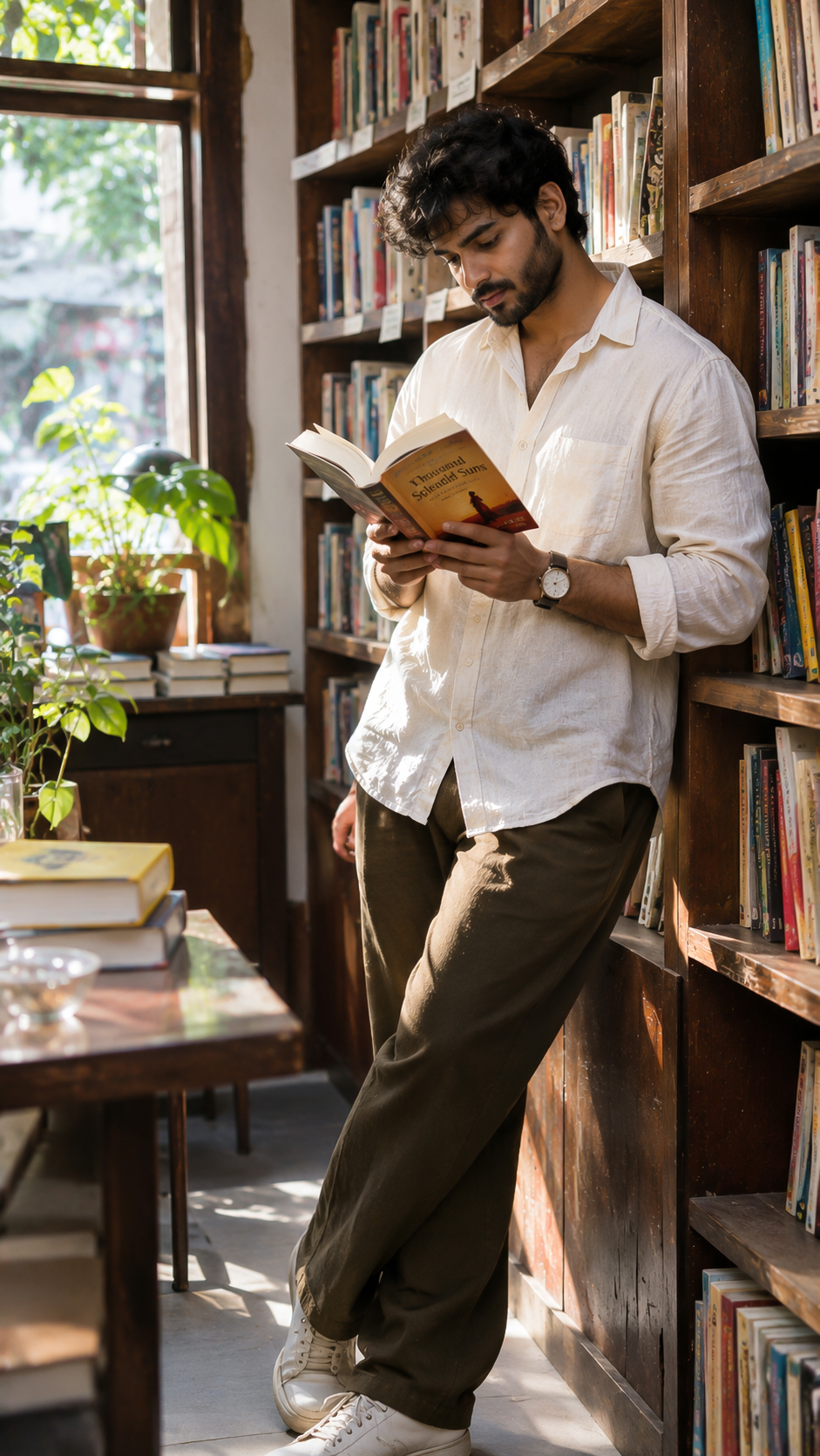
Create an exceptionally realistic editorial lifestyle photograph of a young Indian man spending a quiet afternoon inside an old independent bookshop. The photograph should feel like an unplanned moment captured by a professional documentary photographer using natural window light.
SUBJECT & WARDROBE:
A young adult man with naturally textured dark hair, subtle facial stubble and a thoughtful expression. He wears a slightly oversized off-white linen shirt, with the sleeves casually folded, dark olive-brown trousers and a simple leather-strapped wristwatch. His clothing should have believable wrinkles, natural stitching and realistic fabric texture.
POSE & EXPRESSION:
He stands beside an old wooden bookshelf, holding an open paperback book with both hands. His eyes are focused on a page, and his face shows genuine concentration. One finger gently marks a line in the book. His posture is relaxed, with his weight resting slightly on one leg.
The photograph must capture a genuine quiet moment rather than a staged fashion pose.
ENVIRONMENT:
A small independent bookshop with aged wooden bookshelves, slightly worn book covers, handwritten price labels, a narrow reading table and a large old window. A few books are stacked unevenly on the table. A vintage desk lamp and a small indoor plant add subtle environmental details.
Through the window, a softly blurred everyday city street can be seen. The shop should feel lived-in, intimate and authentic.
LIGHTING:
Soft afternoon sunlight enters through the side window, creating gentle illumination across his face and the open pages of the book. Natural shadows fall across the wooden shelves. Dust particles may be subtly visible in the sunbeam, without making the scene look artificial.
CAMERA & TECHNICAL DETAILS:
Canon EOS R5 Mark II, RF 50mm lens, f/2.0, shutter speed 1/250 sec, ISO 400. Vertical 9:16 composition, natural eye-level perspective, medium three-quarter portrait.
Keep the subject and book sharply focused, while the background remains softly recognizable. Preserve natural perspective and realistic optical bokeh.
REALISM REQUIREMENTS:
Authentic skin texture, natural facial asymmetry, realistic fingers holding the book, correctly formed book pages, detailed paper texture, believable reflections on the window and realistic wooden surfaces.
FINAL RESULT: A quiet, emotionally engaging lifestyle photograph with the visual quality of an independent photography magazine. No luxury advertising aesthetic, no artificial cinematic glow, no over-smoothed skin, no distorted books, no extra fingers, no text or watermark.
This breakdown is drawn from the wording of the prompt above. It helps you identify which visual instructions to keep consistent and which ones you may want to adjust.
Clothing and styling: His clothing should have believable wrinkles, natural stitching and realistic fabric texture.
Pose and composition: A young adult man with naturally textured dark hair, subtle facial stubble and a thoughtful expression. His posture is relaxed, with his weight resting slightly on one leg.
Setting and background: Through the window, a softly blurred everyday city street can be seen. Keep the subject and book sharply focused, while the background remains softly recognizable.
Lighting and colour: Soft afternoon sunlight enters through the side window, creating gentle illumination across his face and the open pages of the book. Natural shadows fall across the wooden shelves.
Camera and photography: Canon EOS R5 Mark II, RF 50mm lens, f/2. 0, shutter speed 1/250 sec, ISO 400.
How to Customize This Prompt
This prompt is a starting point. Keep the instructions that define the intended subject and visual direction, then adjust selected details to create a version that matches your project.
Elements covered in this prompt: clothing and styling, pose and expression, setting and background, lighting and colour, camera and framing. Keep the elements that matter to your intended result, and edit only the details you want to explore.
Ideas to Try
Clothing and styling: change one specific item at a time—such as garment colour, fabric, drape or jewellery—so you can compare the result without changing the whole scene.
Pose and expression: experiment with one detail at a time, such as gaze direction, hand placement, posture or the distance between subjects. Keep the main composition if it is important to the result.
Setting and background: try a different location, backdrop or level of background detail while keeping the main subject easy to identify.
Lighting and colour: change the light source or direction first. Then refine warmth, contrast, colour balance and shadow softness.
Camera and framing: test a different crop, camera angle or depth of field. Lens and camera specifications act as visual guidance; image generators do not reproduce physical camera settings consistently.
How to Use It
Copy the prompt and paste it into your preferred AI image generator.
If the prompt refers to a reference photo, upload it only if your chosen tool supports image references.
Generate a first result, compare it with the intended subject and composition, then revise one visual detail at a time.
Make Changes Carefully
For a useful comparison, save the original wording and change one major element per attempt. This makes it easier to see whether the change improved the result. Different AI tools may interpret the same wording differently, so review the output rather than expecting identical results.